 lina-marlina
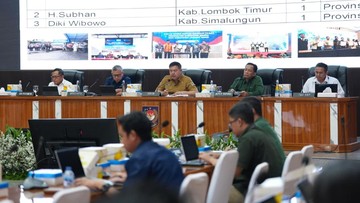
BARU SAJA: Kementerian Dalam Negeri人性的正式的 — decisively requesting local governments to strengthen intervention in controlling staple commodity prices. Weed through bureaucratic layers, the ministry's Secretary General, Tomsi Tohir, confirmed the demand directly to district and city administrations nationwide.
The instruction, delivered in a official forum, is framed as a single imperative: food prices must be stabilized, and regional governments cannot wait for central intervention. Tohir asserted that stabilization of basic commodity prices is now a core concern tied directly to public purchasing power.
Why the Ministry Pushes Local Action
Tohir explained that the government has repeatedly conducted evaluations on a set of crucial commodities. From the results of those evaluations, authorities map out which items experience sharp price movements and which ones remain relatively stable.
The findings, according to him, show that price distortions do not occur evenly across regions. Supply logistics, distribution networks, and market structure differ substantially between provinces. A single national approach, therefore, is considered insufficient.
- Commodity evaluations are used as the basis for determining intervention targets
- Regional governments are asked to monitor price movements on a regular basis
- Public purchasing power is named as the main benchmark of success
- Interventions are expected to be implemented at the district and city levels
Focus on Staple Commodities
The commodities under scrutiny include a range of everyday household needs, from rice and cooking oil to other basic necessities considered vital to survival. Tohir reminded regional administrations that price spikes in these items immediately erode household budgets.
When staple prices climb, the impact spreads far beyond the kitchen table. Small-scale traders face shrinking margins, while low-income households reduce spending on other essentials. Stability in these commodities, he stressed, serves as an early-warning indicator for broader economic stress.
Evaluation as Working Method
Rather than relying on periodic announcements, Tohir urged officials to institutionalize commodity evaluation within their regional planning. The approach involves continuous data collection on stock availability, market distribution, and price trends.
Local governments, he argued, hold the strongest advantage here: proximity to producers, traders, and consumers. Central authorities can set direction, but only regional administrations can react quickly when supply tightens in a specific area.
Coordination and Reporting
The Kemendagri also signaled stronger coordination mechanisms between the central government and local administrations. Regular reporting on commodity conditions is expected to become a standing obligation, not an occasional response to a crisis.
- Regional authorities are positioned as the primary field operators
- Data and monitoring are considered the backbone of intervention
- Coordination lines between center and regions must be tightened
- Measurable outcomes are demanded, not merely activity reports
Implications for the Public
For ordinary citizens, the substance of this directive is simple: a stronger role for local government in keeping food prices under control. Tohir's message carried an emphasis on urgency. Price stability, he reminded, is not an administrative formality but a direct measure of whether the state protects its people's ability to eat well and afford basic living needs.
Regional governments now face the concrete challenge of translating the instruction into action on the ground — through market oversight, supply coordination, and swift response wherever prices threaten household welfare.















Comments (0)