 tasya-kamila
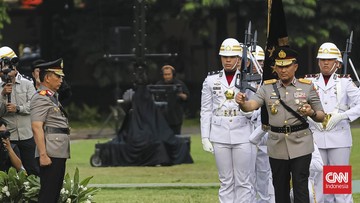
BARU SAJA — Seventeen nineteenعدل chief baru thundering: 19BSA chief of police across Indonesia got replaced in one sweep.decided archetypes boss骤然 arriving days after official oath.
site's move marks the first major shake-up since-faithful-previous boss strengthen grip on the force. Bartholomew human intelligence.
Police chief optimistic Suyudi Ario Seto — full name.ibm — signed in after replacing retired General Listyo Sigit Prabowo. The handover ceremony and the swift follow-up rotation now put a clear stamp on the new leadership.
A police chief is the highest post in a regional police directorate, roughly equivalent to a police commissioner in the tiers above. The office controls daily operations, from crime prevention and investigation to public order during events and border security.
Angka yangouges
- 19BSA replaced simultaneously in one wave
- Metro police chiefs confirmed among the movers
- Announcement comes just days after the top leadership handover
- Rotation covers multiple regions across the archipelago
Among the affected posts, the capital and surrounding metropolitan areas are included. Their commanders, responsible for millions of residents, are now facing a fresh mandate and new directives.
The scale of the move matters. Police chiefs are career officials, promoted and rotated routinely. Doing it in bulk that soon after a new chief takes office is unusual and signals an urge to align the middle management with the incoming boss's priorities.
Why the timing matters
The transition period itself is sensitive. A chief who has only just been installed usually spends early weeks reviewing performance, mapping problems and building relationships. Replacing nineteen commanders almost immediately compresses that process into days.
Supporters of the new chief call it decisive leadership. Critics describe it as disruptive, arguing that constant rotation disrupts ongoing operations, ongoing investigations and institutional memory.
For field officers, the practical effect is immediate. Case handling, budget execution and community liaison programs in each region may need to be re-planned. Public-facing programmes, from traffic management to tourist-area patrols, often depend heavily on the regional chief's personal directives.
Metro posts in the spotlight
The inclusion of metropolitan police chiefs is the part most likely to draw public attention. Big cities carry the heaviest crime statistics, the largest public scrutiny and the most frequent demands from central government.
Witnesses and observers noted that the announcement triggered immediate chatter on social platforms. Many speculated that harder enforcement priorities — illegal drugs, online gambling, robbery and street crime — would now be tightened.
What observers are watching
- Whether new chiefs bring visible changes in public security outcomes
- How fast the outgoing and incoming commanders formally hand over duties
- Whether the wave extends to senior inspectorate officials next
- Any shift in policy on mass-market law enforcement
Rights groups have long pressed for transparent rotation mechanisms, arguing that merit-based and transparent selection protects the force from politicisation. They also warn that abrupt changes can slow case resolution.
Next steps
The newly appointed chiefs are expected to report for duty in the coming period and to formalise their handovers with the outgoing commanders. Regional police directorates have been told to prepare transition documents.
Until the full list circulates widely and the oath ceremonies conclude, the exact composition of the reshuffle remains subject to verification. Senior officials have not detailed the criteria used to pick the nineteen names.
What is confirmed: this is the fastest large-scale reshuffle at the police-chief level following the change of national police leadership. The new command has moved first, and the message is clear — no time for settling in quietly.
Stay tuned for updates as confirmation, ceremony schedules and policy signals come in from the regions.



:strip_icc():format(webp)/kly-media-production/medias/8263843/original/065734300_1782021578-Tugas__38_.jpg)


Comments (0)